Showing posts with label Catlettsburg. Show all posts

Tuesday, July 18, 2023

Nancy Jane Duncan - Female Rebel Spy

June of 1862 saw a marked change in policy how Union authorities in Kentucky dealt with Confederate sympathizers. On May 27, 1862, Secretary of War Edwin Stanton appointed Brigadier General Jeremiah T. Boyle as the new military commander of Kentucky. Boyle assumed his position on June 1, 1862. His predecessors had followed more conciliatory measures whereas Boyle believed “There are many so-called Union men in Kentucky who still cling to a hope of reconciliation and believe in a policy of leniency. I believe in subjugation--complete subjugation by hard and vigorous dealing with traitors and treason. Any other policy I beg to say in my opinion will be ruinous to us in Kentucky.” 

Brigadier General Jeremiah T. Boyle
Source: Wikipedia

After James A. Garfield's departure in early spring of 1862, Colonel Jonathan Cranor had taken command of the Union troops in Eastern Kentucky. After the Battle of Middle Creek, Garfield had implemented a policy of kindness. Before he left the Big Sandy Valley, Garfield instructed Cranor to see to the protection of citizens' rights and persons. He stressed that, "While all force and rebellion against the Government must promptly be put down, it must also be remembered that the people in this valley are to live together as fellow-citizens and neighbors after the war is over. All that we can do to inaugurate peace and concord among them while the army is here should be done." However, Cranor believed in sterner methods and found in Boyle a commander who was much more aligned with his own personal views. Thus began a series of arrests that would continue throughout the summer of 1862.

Although the majority of detainees were men, Boyle also began targeting suspected rebel women who showed their loyalty to the Confederate cause either as vocal supporters, spies, smugglers, guerrillas, or even as soldiers. While military authorities discounted women's activities at first as insignificant they soon began to realize the potential damage these women could cause. Up to this point, women had taken full advantage of the code of chivalry that called for women to be protected and cherished which generally shielded them from closer scrutiny and arrest.  Incarcerating women was considered barbarous and publicly condemned by many. However, a defiant Boyle declared, "The women think they will rule Kentucky but I will show them they can't do it while I am military governor." 

Cynthia Stewart was the wife of Johnson County attorney James E. Stewart who was a political prisoner at Camp Chase since his arrest shortly after the Battle of Middle Creek. She was living in Catlettsburg when Union authorities began monitoring her letters she was writing to her husband for any contraband news. It angered her that her private correspondence would be exposed so publicly and read by so many, to the point that she felt like giving up writing letters altogether. On July 2, 1862, Cynthia noted in one of her letters that, "there was a lady arrested here & sent to prison this week  I did not know her  sent to Louisville." 

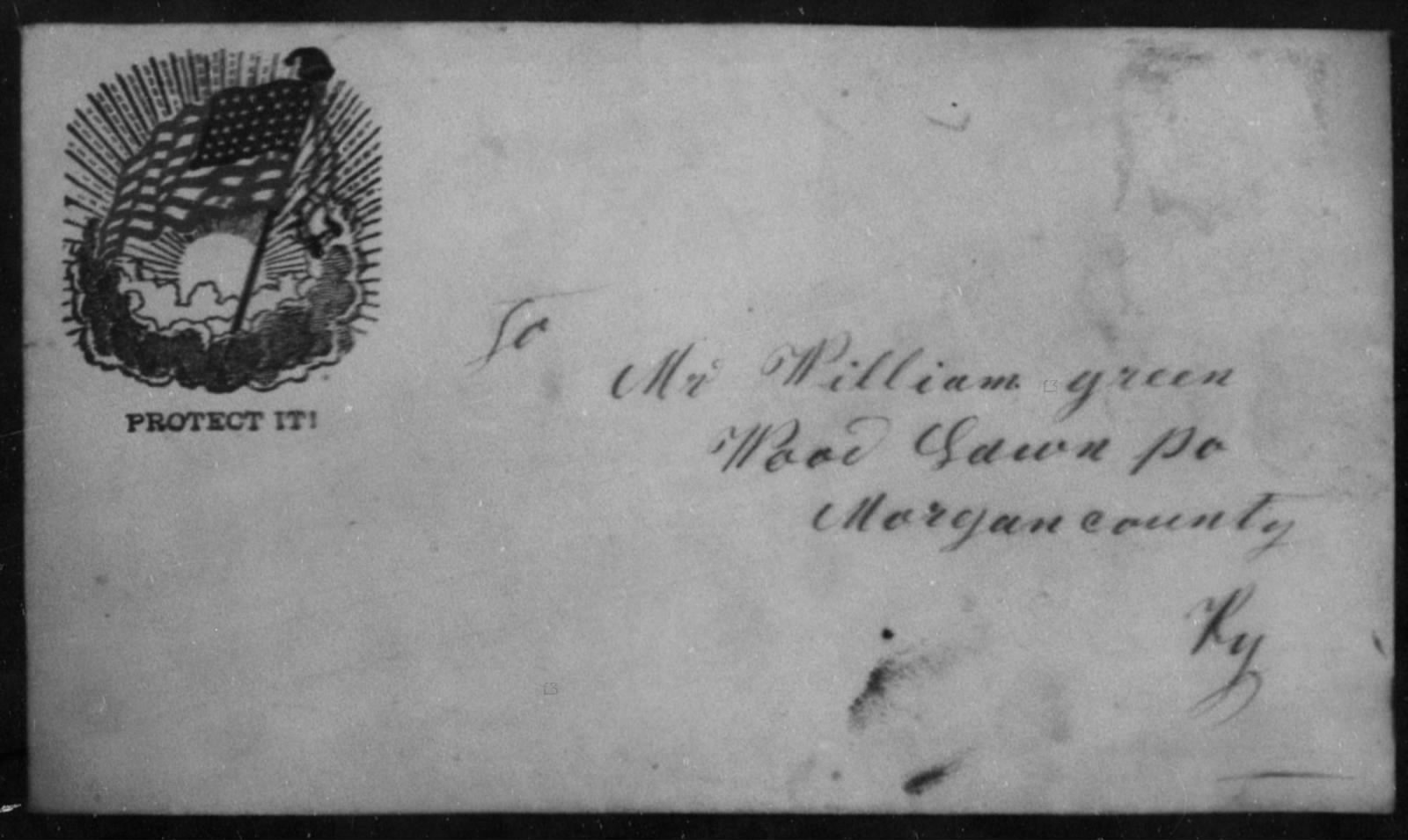
The lady in question was Nancy Jane Duncan who first appeared in Eastern Kentucky on June 5, 1862, when she traveled up the Ohio River on board the Steamer Izetta and landed at Catlettsburg. According to the porter of the boat, "she had Seven heavy trunks on board, three of which were unloaded or put off here with her, and the other four were by her direction put off at Ceredo."

Gallipolis Journal, June 5, 1862

According to local informants, Mrs. Duncan passed through Catlettsburg, "pretending that she was trying to get to Carter county. Her movements excited suspicion at the time. She had several trunks very heavily laden with what is pretty well understood to be arms for the guerrillas in Morgan county." Provost Marshal Captain Matchett, 40th OVI, noted, "None of this baggage was inspected that I know of ~ It is very probably that the trunks contained Revolvers and Gun Caps and Cartridges."

It wasn't an unreasonable assumption, considering that other women had smuggled similar contraband across enemy lines. Women found creative ways to accomplish their objective, including concealing articles in coffins. It is unknown who the intended recipients of Nancy Jane Duncan's trunks were. As a note of interest, just a few miles above Ceredo, at Holderby's Landing, lived Sarah J. Stewart, wife of James Stewart, who had two sons in the Confederate army. At some point, Mrs. Stewart and her friend Mrs. Miller had gone through the lines into Kentucky, at Catlettsburg, in order to secure medicine to be sent by sympathizers into "Dixie." Both women were arrested as spies and held for some time, pending investigation. It was only through the efforts of a family friend, Dr. J. D. Kincaid, that the women were released. 

Nancy Jane Duncan did not linger at Catlettsburg. According to Provost Marshal Matchett she was closely watched after she left town with the remaining three trunks, "and her conduct was such as to satisfy people of her mission." The most likely mode of travel would have been one of the steamboats that plied up and down the Big Sandy River. The first stop on her journey was Cassville, in Wayne County, Virginia (now West Virginia), a small town situated right across the river from Louisa, Kentucky, a Union strong hold. At Cassville, she met and was welcomed by the families of James Stone, David Mitchell and Washington Ratliff. She boarded with James Stone whose wife Nancy maintained a hotel in town. Stone was a merchant and had come under suspicion of being a Southern sympathizer very early on in the War. Nancy Jane Duncan may have been a relative. (Stone was the s/o Ezekiel Stone & Edith Elizabeth Duncan) 

His close neighbors were David Mitchell, who operated a saddler shop, and Washington Ratliff who owned a small farm. While at Cassville, Nancy Jane Duncan seemed to have struck up friendships with James Stone's daughter Miss Edea Stone, as well as Miss Marey Mitchell, David Mitchells daughter and Miss Nancy Ann Ratliff, Washington Ratliff's daughter.  It is unclear how much time Nancy Jane Duncan spent in Cassville. Still carrying one or more of her heavy trunks, it is very likely that she enlisted the help of a trusted companion to convey them to Morgan County either by wagon or pack mule. Considering the circumstances, it was a dangerous mission to travel alone, especially as a woman. When she left town, she crossed the Big Sandy River by ferry and into Louisa. 

Nancy Jane Duncan did not remain in town any longer than necessary in order to avoid drawing too much attention to her person and was soon on her way to Morgan County. The most logical way for her to travel would have been on the road to Blaine, which is present-day KY Rt. 32. However, her presence did not escape the attention of Union authorities who may have been alerted about her in advance. She later noted, "they followed Me from Louisa to take My bagig but as they Dideant overtake Me the first Day they turned back." Her journey would have taken her past the house of Claibourne Swetnam, another well-known Confederate sympathizer, where she may have spent the night. Over the years Swetnam welcomed many travelers in his home, which would also include CSA General Humphrey Marshall just nine months later. 

Claibourne Swetnam House, Blaine, Kentucky
Source: Marlitta H. Perkins Collection
From Blaine, Nancy Jane Dunan's route continued on the main road to West Liberty, passing by Sagraves Mill to the junction with the Paintsville road. A few miles further another road forked off, leading through a mountain gap (near present-day Isonville) and up Newcombe Creek. A small bridle path leading from Kendall Branch connected Newcombe with the Middle Fork of Little Sandy River. It was somewhere in this area where Wood Lawn post office was located and where Nancy Jane Duncan's contact person William Green resided. Wood Lawn's post-master was Lewis Kendall whose brother Jesse, the former post-master, was now serving in the Confederate Army. 

Morgan County Postmasters, 1850s and 1860s
William Green was, in all likelihood, William Wellington Green, Sr. His wife was Sarah "Sallie" Hutchinson. William's grandmother was Jael Ellen Duncan before she married Samuel Stallard II. Again, it is possible that Nancy Jane Duncan was related to her host. She addressed him as "brother" but it may not have been meant literally but more figuratively, as in "brother in arms." 

If Nancy Jane Duncan was, indeed, carrying military supplies in her trunks as was suspected, it stands to reason that they may have been intended for Fields' Company of Partisan Rangers. At the time of her visit to the Middle Fork/Newcombe Creek area, the unit was in the early stages of formation in Morgan and Carter Counties. The commander was William Jason Fields (b. 1819, s/o James Anderson Fields & Elizabeth Maness) who was serving his fourth term as Carter County sheriff when the Civil War began. He subsequently joined the 5th KY Infantry (CS) and served as 2nd Lieutenant of Company G. After resigning his commission in 1862, he returned to Eastern Kentucky and began recruiting Fields' Rangers. His 1st cousin Preston Fields (son of William Jason Fields (1790) and Anna Creech (1801)) would serve in Fields' Rangers. He was married to William W. and Sallie Green's daughter Minerva since January 15, 1860.  

Other family members of William W. Green had ties to Fields' unit as well. William's sister Almeda was married to John Wesley Sparks, who, with his brother Hugh Sparks, served under Fields. Two of William Wellington Green's nephews, William M. and Francis Marion Green, sons of Robert Kilgore Green, were also members. 

While in Morgan County, Nancy Jane Duncan was able to briefly reunite with her daughters Lisey and Louisa who were living temporarily with William Green and his family. She found the girls, "all Well and harty and Doing Well." It was her hope to take them home with her on her next trip to Kentucky three months later. After visiting for a short while with her children and the Greens, Nancy Jane Duncan took her leave and returned to Catlettsburg, where she arrived on Saturday evening, June 28, 1862. It appears that she had a pre-arranged meeting with someone in town that may have been related to her business in Kentucky. She later mentioned that she was successful in meeting the appointment.

The following morning, after writing a letter to her friends in Cassville, Nancy Jane Duncan attended church services in Catlettsburg. Afterwards, she spent the afternoon writing a letter to William Green in Morgan County. She then took the letters to the post office and deposited them. Her plan was to leave Catlettsburg by boat that same evening in direction Cincinnati/Louisville. "A moment before she started she was surrounded at her hotel by several well known Sympathizers and was conversing rapidly ~" Matchett's spies were nearby, but "Only a few broken sentences however were overheard by my unsuspicicious eaves dropper - and, not enough to amount to prooff against her."

Matchett's trip to the post office, however, proved to be more successful. Her letters were retrieved and opened. Combined with several reports he had received about Nancy Jane Duncan's activities, Matchett felt confident that he had enough evidence to arrest her before she would be able to board a steam boat and leave town. 

Nancy Jane Duncan's letter to Morgan County, Kentucky

Nancy Jane Duncan's letter to Cassville, Virginia

The next morning, Monday, June 30, 1862, Nancy Jane Duncan was sent off to Louisville as a prisoner. In his letter to Louisville Provost Marshal Lt. Colonel Henry Dent, Matchett stated, "Being at a loss for proper instruction I send for your apprehension Mrs Nancy Jane Duncan to gather with two letters written by her and dropped in the Post Office of this place yesterday evening and by me extracted therefrom and opened. All thes(e) things however taken in connection with several reports not necessary to detail here and those letters taken from the P.O., which she acknowledges she wrote - and which I herewith forward to you justifies me I think in apprehending her, and pursuing the course I have taken."

Her arrest was mentioned in a number of papers, including the Louisville Daily Democrat, July 10, 1862 and the Wheeling Daily Intelligencer, July 12, 1862.

At this point, due to the lack of records, we lose track of Nancy Jane Duncan. The earliest prison record, Louisville Prison Register No. 1, begins in November of 1862. Names of citizens who were arrested were excluded from the register and kept separately and have not been located. 

Louisville Prison Register No. 1
At first, some female prisoners were put up in hotels, under guard. Others were taken to Barracks No. 2, a facility which normally served as a camp for paroled US soldiers. It was located on Main between Seventh and Eighth Streets. Due to the increase in numbers of female prisoners, General Boyle issued instructions on July 1, 1862, to the Provost Marshals throughout Kentucky "to fit up quarters for the imprisonment of such disloyal females" as they might find it necessary to arrest. 

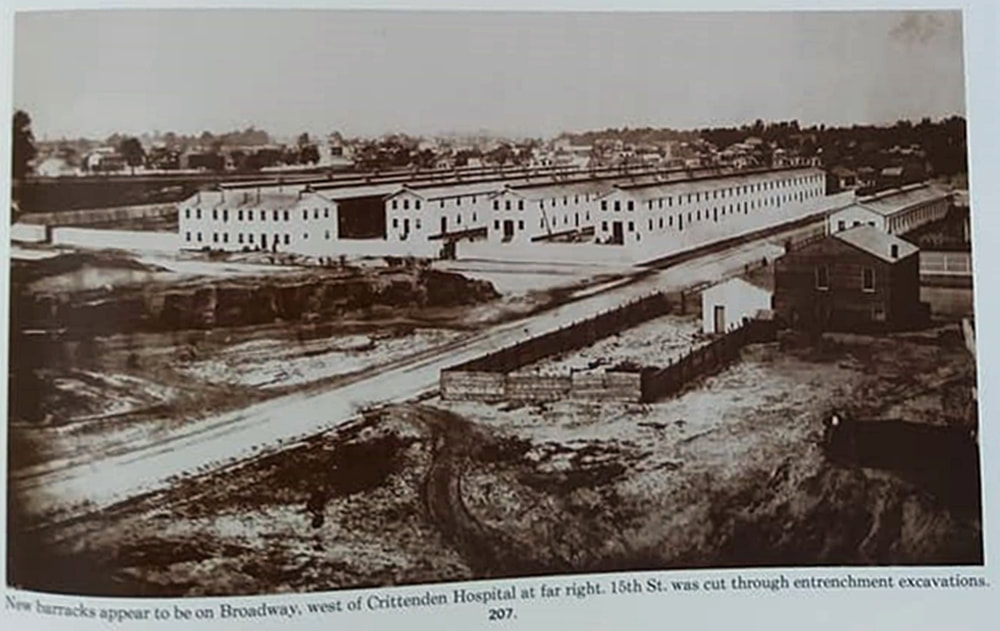
Accordingly, Union authorities in Louisville took over a large house, situated between 12th and 13th Streets, at the corner of 13th and Broadway, and converted it into a military prison for women. It was within walking distance of the regular Military Prison, the Refugee Home, the Crittenden US General Hospital and a few blocks from the L & N. Railroad Depot.

The two-story building was described as a "good dwelling-house, well ventilated and dry." The grounds surrounding the house were spacious and shaded with fruit and ornamental trees. The women were allowed the full freedom of the grounds which were enclosed by a fence. The gate was guarded by a sentry on duty at that post. The women were supplied army rations, "yet prepared in such a manner as to render them palatable even to the delicate." The rooms were modestly furnished and contained on an average three double beds. The quarters were considered "airy, comfortable, and healthy." The sick were taken care of in two of the rooms in the back part of the building. In some cases, the incarcerated women were accompanied by their children. 

1865 map of Louisville. Red shaded area indicates the general
vicinity where the Female Military Prison was located. 
Map Source: LOC

Barracks near Crittenden US General Hospital, Broadway and 15th
Source: Historic Photos of Louisville Kentucky and Environs

In general, women prisoners were given several choices, depending on the severity of the charges:
- take the oath of allegiance and return home
- be jailed
- be exiled to Confederate lines, not to return for the duration of the war
- be released north of the Ohio River, not to return for the duration of the war

In absence of any type of records, it is difficult to determine which choice Nancy Jane Duncan made or what fate she and her children met. Her true identity has remained a mystery as she he may have operated under an assumed name. It is possible that further research may yet uncover a direct family connection between her and the Stone as well as the Green families. This is an on-going project and family researchers are encouraged to contact me with any additional information that may shed more light on Nancy Jane Duncan or the families she was involved with. 


Researched, transcribed and written by Marlitta H. Perkins, January/July 2023. Copyright © 2023. All Rights Reserved.
 

Links of Interest
Source: LOC

Source: Eastern Kentucky and the Civil War


Monday, February 3, 2014

The Cold Snap of 1864

Winter in the mountains of Eastern Kentucky
As temperatures have plummeted this winter to near-record lows, with much of the nation in the grip of polar air masses that have brought snow as far as Florida and Alabama, the question emerges - how unusual is this weather, really? Are there any historic parallels? Look no further than the cold snap of 1864 which was very similar to our current weather in many respects.

The Big Sandy River in Eastern Kentucky froze over in December of 1863 and remained so for nearly three months, until late February 1864. Snow covered the ground and the temperatures hovered right at zero degrees or lower. Things turned worse on New Years Eve 1863 and culminated on Friday, January 1, 1864, a day remembered by all who were old enough at that time, as the "The Cold New Year."

The Louisville Weekly Journal reported on December 31, 1863, that the “weather glasses in our city gave unfailing premonitions of the remarkable change in the weather which accompanied the close of the old year and the opening of the new. At noon on Thursday, the barometer indicated 29.62, when it commenced falling rapidly, accompanied by a rain storm, and the wind a little north of west. At four in the afternoon the temperature was forty-seven degrees above zero, when it commenced steadily and rapidly falling.”

At dusk, the rain changed into snow and the winds began blowing violently. Within five hours, the temperatures dropped thirty-five degrees. At nine o’clock P.M., the thermometers registered twelve degrees above zero which dropped to one degree above zero within ninety minutes.

The severe cold weather arrived at Portsmouth, Ohio, several hours later. New Years Eve was a dark drizzling day and it remained quite warm until 9 P.M. At this time, it was still fifty-three degrees and raining. Things started to change quickly at 9:30 P.M. when the wind started blowing hard from the Northeast. By 10:30 P.M., the thermometer showed twenty degrees and kept falling throughout the night.

The weather deteriorated even further on New Years Day. At 7 o’clock A.M., it was eight degrees above zero, at 2 P.M., four degrees above and at 9 P.M., one degree above. It was reported that heavy winds were blowing all day. In comparison, it was clear and cold at Cincinnati at 8 o’clock in the morning and the mercury stood at seven degrees below zero

One journalist noted, “The New Year was ushered in with a wind that blew almost a hurricane, and reminded one of the stormy nights when witches are said in old nursery legends to be abroad in their work of mischief. The cold was intense, penetrating everywhere, freezing every thing, not guarded by artificial heat, that could be frozen, and exceeding in degree the cold on any New Year's Day ever known by 'the oldest inhabitant'."

The severe cold weather extended throughout the West and Northwest. Two break men on the Oil Creek railroad, in Western Pennsylvania, were frozen to death while standing at their posts!
In Wisconsin, Iowa, Michigan and Northern Illinois and Indiana, the cold was still more intense. At Milwaukee, on the 1st and 2nd, the thermometer ranged from thirty to forty degrees below zero, and several persons were frozen to death. At Galena, Ill., thermometer twenty-five to thirty-three below; at Madison, Wis., thirty-four to thirty-nine below; at Dubuque, thirty below; at Oshkosh, Wis., thirty-eight below; at Rockford, Ill., thirty below; Fort Wayne, Ind., twenty-eight below. Between Springfield and Virginia, a stage-driver was frozen to death on his box. The Mississippi River was frozen over at St. Louis, which people crossed on the ice.

Even the Southern States were affected by the “General Freeze Up.” In Richmond, Virginia, the papers reported that, “Matters and things in general concluded to "wait" on Saturday morning, in view of the sudden descent of the temperature below zero. The water froze up in railroad tanks and locomotive boilers, water wheels refused to "circumnavigate", machine shops ceased their clatter, old clocks stopped at "witching hours", hydrants negatived the reservoirs, the town pumps were in demand, the boards of the floors creaked and weather boarding snapped, frosty network frescoed every window pane, and the universal "ugh" that escaped from every mouth went with icy chilliness to the soul of sympathetic nature.”

At Memphis, Tennessee, the thermometer was reported on New Year's Day at ten degrees below zero. Even Georgia was not spared from the cold weather. The Atlanta Intelligencer reported temperatures of twelve degrees at 10 P.M. on January 1st, 1864, and eight degrees the following morning at 7 A.M. “This is the coldest weather we have experienced within forty years, in this country, with a single exception - the cold Saturday (in 1834), when the Mercury fell below zero. It is with difficulty, therefore, that we can write. Not only has our ink frozen, but with the best of fires that we can command, our fingers become numb before a paragraph can be written.”

The severe weather was especially hard on the soldiers. The newspapers reported that, “at Fort Halleck, Columbus, on the Mississippi, above Memphis, on New Year's eve, many of the negro soldiers were badly frozen; and at Island No. 10, ten negroes were frozen to death, and more were expected to die. On the same night, at the same place, eight men of the 52nd Indiana Infantry “were out on a skiff, and being unable to make the shore, were cast on a sand-bar, where three of the party were frozen to death before they could be rescued, two others died the next day, and the others were not expected to live.” The soldiers at Camp Indianapolis also suffered considerably on New Years Eve when a number had their ears and feet frozen.

According to news from Louisville, three Union soldiers were frozen to death at Camp Nelson, Kentucky, on the night of January 2, 1864. At Camp Yates, Springfield, Illinois, several soldiers met the same fate, as well as two soldiers at Camp Chase, Ohio.

Similar hardships were also endured by soldiers who were stationed in Eastern Kentucky where the temperatures dropped well below zero. According to local citizens, the beginning days of January 1864 saw the coldest weather and most abrupt change to be recorded in this section for many years. 

On New Years Day, a soldier from the 5th Independent Battalion OH Cavalry recorded the following from winter quarters at Poplar Plains, “Turned awfully cold last night, a strong wind began blowing from the northwest about nine o'clock and by midnight everything was frozen up. We left our tents and hovered around blazing fires. Our pickets were all brought in except the one that was sheltered towards Poplar Plains. It is reported to-day that seven men of the 40th Kentucky Infantry were found frozen on their posts east of here. Such intense cold I never felt before.” Another member of the unit wrote, “The night of December 31, 1863, we passed through the cold that ushered in "the cold New Years." The thermometer dropped to 25 degrees below zero, and with difficulty the troops were saved from freezing ... Two soldiers on duty were frozen to death at Mount Sterling below us, and all in all the experience was one not soon to be forgotten.”


Snow covered road, Eastern Kentucky
On New Years Day, the 45th Kentucky Mounted Infantry began to arrive at Mt. Sterling from Paris. “Some of these men were badly frosted and had to lie by at farmhouses,” noted an eye witness, “and it was several days before they all got in, and as they were without tents they were quartered where ever shelter could be found for them, till the cold had abated somewhat, and tents could be procured...”

In an effort to stay warm, the 14th Kentucky Infantry, one of the regiments stationed at Louisa, KY, detailed one of the soldiers as coal digger in the quartermaster department during the months of December 1863 and January 1864.

The cold weather continued unabated. A report from St. Louis noted that, “The weather continues very cold here, the mercury ranging from 5 degrees below to 15 degrees above zero. About one foot of snow lies on the ground, and the sleighing is splendid. Heavily laden wagons cross the river on ice, and there are no indications of a speedy break-up. The weather has been intensely cold throughout the State. Many persons and a large amount of stock have been frozen to death.”

On January 8, 1864, Portsmouth recorded ten inches of snow and the thermometer had not risen above twenty degrees. The Ohio River was full of floating ice and finally closed up firmly on Jan. 13, 1864. It remained ice-bound which prevented the steamboats from running thus limiting the delivery of supplies to citizens and soldiers alike. The soldiers' families were impacted as well and those who had not been able to put up enough food for the winter were in dire straits. In order to alleviate some of the suffering, Catlettsburg merchant William H. Geiger donated two steers and one beef to the poor soldiers' wives and families.


The Ohio River at Greenup with floating ice, January 2014
Photograph courtesy of Nancy Wright Bays
As the frozen Big Sandy River prevented steamboats from supplying the Union post at Louisa with stores, the quartermaster department soon was running low on provisions. Therefore, a detachment of the 39th KY Mounted Infantry was ordered to proceed to Catlettsburg on January 9, 1864.  An attack by the enemy was not expected since the weather was extremely cold.  However, as the men were marching along the west bank of the Big Sandy River, they were quietly followed on the other side of the river by a detachment of about 150 men of the 16th Virginia Cavalry, under the command of Colonel Milton J. Ferguson.

By nightfall, the 39th Kentucky detachment had reached Turman's Ferry at the mouth of Bear Creek, a prominent point on the Big Sandy River about 14 miles above Catlettsburg. Just below, at the present-day site of the Cavanaugh M. E. Church, stood an old log schoolhouse, which the men selected as their sleeping quarters. Still completely unsuspecting of any danger, no pickets were posted, “and the officers were asleep in the neighboring farm houses." 

The 16th Virginia Cavalry, under the cover of night, crossed the Big Sandy River on the ice and quietly approached the quarters of the unsuspecting Union soldiers. The Confederates wasted no time and opened fire on the sleeping men. One of the lieutenants was killed in the fight, nine men taken prisoners, including one lieutenant, and the rest, “were driven out into the snow with weather at about zero or lower." The 16th Virginia Cavalry re-crossed the icy river and vanished as quickly as they had appeared. A Union force from Catlettsburg was later sent out to pursue the Confederates but came back empty handed. Some of the men who had taken to the woods, "became frozen, especially their feet, and suffered greatly." On January 11, 1864, "A part of the wounded left behind arrived at the Ashland Hospital, not only badly wounded, but frostbitten.” The majority of them required amputations. According to Catlettsburg post commander Major Rhys Thomas, twenty men had to be sent to the hospital.  


Snowy  Creek in Eastern Kentucky
In closing, the eloquent remarks of the editor of the Daily Ohio Statesman seem fitting. “The New Year has come in, our brother journalists say, like a Lion - more, we should think, like a Russian or Norwegian Bear. A little snow would have probably moderated the intensity of this Arctic weather; but that was not vouchsafed us. Is this rugged birth of the New Year figurative of the hardships of the mass of people - the laboring poor - will have to endure during its existence, or does it prefigure that, though it freezes us with its cold frowns at its commencement, it will comfort and gladden us with sunny smiles before its close? Let us all hope, and so labor, that we may have cause to remember and bless the year 1864.”

The same thoughts and blessings go out to everyone for the year 2014, as we look outside our windows, shivering from yet another winter storm.


Article researched and written by Marlitta H. Perkins, January/February 2014. Images are the author's property, unless noted otherwise. Unauthorized use and/or duplication, including images, without express written notice by the author is strictly prohibited. © 2014. All Rights Reserved.

Monday, July 8, 2013

Dear John ~ The Hazards of Mail Delivery


Patriotic cover, postmarked April 14 (1862) at Catlettsburg, KY 
The Post Office Department of the Confederate States of America was established February 21, 1861, by an act of the Provisional Congress of the Confederate States. On March 6, 1861, former U.S. Congressman John Henninger Reagan was appointed postmaster general of the Confederate States of America by President Jefferson Davis.

Reagan instructed southern postmasters to continue to render their accounts to the United States as before until the Confederate postal system was organized. In May 1861, Reagan issued a proclamation stating that he officially would assume control of the Post Office Department of the Confederate States on June 1, 1861. US Postmaster General Blair  responded by ordering the cessation of United States mail service  throughout the South on May 31, 1861. This also included mail going from North to South and vice versa.

After this time, private express companies, such as Adams Express, American Letter Express, and Whiteside's Express, still managed to carry the mail across enemy lines, until the U.S. Post Office ordered an end to such traffic, effective August 26, 1861.

Mail delivery was carried out by private contractors. Transporting the mails was filled with danger, particularly along the Kentucky and Virginia border which was infested with bushwhackers. Interrupted service, robberies and guerrilla sniping were a common occurrence. On Sept. 5, 1861, the Daily Louisville Democrat reported that, "In the counties along the Kentucky and Virginia line, several mails have been robbed by men, who came from Virginia, across the line, for that purpose."

One such incidence took place on Wednesday, August 21, 1861, when the mail from Louisa to Warfield, via Cassville (VA), was robbed. Nathan Holt, a wealthy Wayne Co. VA farmer and one of the first local constables, was the mail contractor. The mail boy, his 17 year old son Bernard P. Holt, had left Warfield at 6 o'clock in the morning with the mail and was travelling on the Virginia side of the Big Sandy River toward Cassville. About 5 o'clock in the evening, Bernard arrived within 1 1/2 miles from town when he noticed two men, Alex. Vinson and John Walker, on the road side waiting for him. The boy was knocked from his horse by Vinson and Walker who swore that they were going to have that Lincoln mail. Bernard Holt engaged in a fight with Walker while Vinson cut the mailbag and took out and destroyed all the mail matter, and then took the horse from the boy. Both men left together.

Bernard P. Holt alerted the citizens who made pursuit and captured Vinson about three miles from the place of the robbery. He was brought back to Cassville, and had a hearing before Justice James Stone, who held him over for further trial. Vinson was then put in custody of Constable Bow, who summoned two citizens as guard to watch Vinson through the night. He however made his escape before morning. The Sandy Valley Advocate noted, "He and Walker are now at large. From what we can learn, all the officers were secessionists, as well as the guard, and therefore do not wonder at the escape of the prisoner."

Within days after the incident, Bernard P. Holt was fired on by someone in ambush near Taber's creek, between Turman's Ferry and Cassville. The constant threat of rebel incursions made it increasingly difficult to safely maintain postal service in the area, which may have contributed to the closing of the Falls of Tug (William Ratcliffe, post master) and Palmetto Post Offices on Sept. 3, 1861. David Holt, Bernard's older brother, had held the position of post master at Palmetto since March 9, 1858.

 Nevertheless, Nathan Holt entered into another contract with the US post office on April 24, 1862, to carry the mail twice a week between Warfield and Louisa, KY. In the end, however, Holt failed to execute the contract.

Instead, Nathan Holt joined Union Capt. David Bartram Company, 167th Militia, on June 2, 1862, together with his sons William, David, John W. and Bernard. The Holts continued in the militia service until 1864, in Capt. William Bartram's Wayne County Scouts. 

Sanford Scott, who was contracted to carry the mail six times a week between Guyandotte to Catlettsburg, failed to arrive at Catlettsburg on May 4 and June 28, 1861 and 8 times in July of 1861. Scott completely omitted service for the quarter ending Dec. 31, 1861. Deliveries were resumed by John H. Ford, of Catlettsburg, beginning February 21, 1862.


Catlettsburg Postmark, March 14 (1862)
The situation in Kentucky along the Big Sandy River was very similar.  Stephen Bartram who was contracted to carry the mail twice a week from  Catlettsburg to Prestonsburg, a distance of 73 miles one way, encountered similar problems. Bartram failed to arrive at Catlettsburg with the mail on July 24, Sept. 12 and 26, 1861. After being robbed several times, mail service was finally suspended until the end of December of 1861 when the presence of Union troops along the Big Sandy River made it to a degree safer again to carry the mail.

During the first week of November 1861, the Grand Jury, United States Court, in session at Frankfort, KY, found indictments against Harvey T. Hawkins and Milton J. Freese, for robbing the mail. Bail was set at $ 3,000 each, and $3,000 surety.


Cincinnati Postmark, May 13 (1862)
At the beginning of fall 1861, safety concerns led to the discontinuation of mail service on several Eastern Kentucky routes, under act of Congress of February 28, 1861. The act authorized the Postmaster-General to discontinue the postal service on routes where, in his opinion, it "can not be safely continued, or the postal revenues collected, or the postal laws maintained, by reason of any cause whatever, till the same can be safely restored."

Effective Oct. 17, 61, Route # 9555: Mt. Sterling/Piketon, 2 weekly round trips, D. Cooley (contractor)

Effective Oct. 17, 61, Route # 9556:  Mt. Sterling/West Liberty, 2 weekly round trips, H. C. Berkley (contractor)

Special Agent Miller was authorized to employ service upon the above mentioned routes "as far as safety would permit, at not exceeding the rate of the old pay, from Nov. 11, 1861."


Effective Oct. 17, 61, Route # 9578: West Liberty to Louisa, 1 weekly round trip, Wm. P. Davis (contractor)

Effective Nov. 29, 61, Route # 9569: Greenup Court House/Louisa, 1 weekly round trip, Charles Callahan (contractor)
Louisa Postmark, August 13 (1862)
Several Post offices were discontinued in Eastern Kentucky during the Civil war. Given are the dates of closing name of the post masters and date when the post office was re-established, if applicable.

Lawrence
Cherokee, Sept. 13, 1861 (William W. Graham), re-est. Sept. 10, 1867
Warfield, Nov. 4, 1862 (Mark Dempsey) re-est. Aug. 29, 1870
Bolton, Nov. 2, 1861 (Greenville Bolt) see Boyd Co. KY
Riffe's X Roads, June 25, 1863 (Isaac Belcher)
Georges Creek, July 31, 1863 (Thomas P. Salyer)
Lockwood, Dec. 8, 1865 (Jacob Lockwood)
Buchanan (formerly Round Botton, Wayne, VA) est. Sept. 3, 1861 (George Buchanan, followed by Joseph F. Hatten, Sept. 29, 1863)

Floyd
Coal Grove, Feb. 28, 1863 (Stephen Ferguson)
Lanesville, July 31, 1863 (James S. Layne), re-est. Oct. 27, 1865

Pike
Breckenridge, July 21, 1863 (William R. Bevins)
Democracy, Feb. 28, 1863 (William H. Johnson)
Lonville, Oct. 10, 1862 (Thomas L. Marrs)
Piketon, May 20, 1864 (Lewis C. Dils), re-est. Oct. 28, 1865
Robinson Creek, Nov. 5, 1861 (Samuel Keel), re-est. Sept. 28, 1866
Hamilton's Store, July 31, 1863 (Nelson Hamilton)

Boyd
Grass Land, Jan. 30, 1862 (William Davis); re-est. Aug. 28, 1862 and discontinued Feb. 28, 1863 (Madison M. Hensley), re-est. June 11, 1875
Sandy Furnace, Feb. 28, 1863 (Pleasant Barber)
Amanda, Aug. 22, 1862 (George P. Walker)
Bolton, July 21, 1863 (John W. Bolt)

Greenup
Three Prong, Nov. 2, 1861 (J. R. Warnock), re-est. Jun 23, 1866 (Mrs. Martha Warnock)
Truittsville, May 30, 1862 (George W. Truitt)
Callahan, Dec. 2, 1861 (John R. Callahan)
Argylite, Oct. 26, 1861 (James Lampton), re-est. June 24, 1874 (as  Argilite)

Carter
Bell's Trace, April 15, 1863 (Nelson T. Rice)
Bruin, July 31, 1863 (John Hood), re-est. Jan. 16, 1867
Estill Flats, June 4, 1863 (Wesley Fults), re-est. Sept. 10, 1863
Rice's X Roads, July 31, 1863 (Paris Rice)

Lewis
Clarksburgh C. H., Feb. 8, 1864 (Isaac Bassett)


Morgan
Black Water, July 21, 1863 (John C. Dennis), re-est. Feb. 1, 1866
Caney, March 20, 1862 (David F. Lykins), re-est. July 7, 1874
Christy's Fork, Feb. 26, 1862 (Thornton W. Sanford)
Grassy Creek, July 31, 1863 (Thomas Goddwin)
Hampton's Mills, March 20, 1862 (George M. Hampton)
Johnson's Fork, Sept. 10, 1862 (Eli Williams), re-est. in Magoffin Co. KY Jan. 9, 1863 (Mrs. Lodicky Denham)
Little Sandy, Jan. 9, 1864 (William B. Wheeler)
Relief, July 31, 1863 (Wallace W. Brown)
Devil's Fork, Jan. 9, 1864 (George W. Stamper)

Wolfe
Still Water, Feb. 14, 1865 (Wm. W. Waterman)
Devil's Creek, July 31, 1863 (Sandford R. Shackelford)
Hazel Green, Nov. 8, 1865 (Addison H. Tracey), re-est. Feb. 1, 1866

Rowan
Blue Rock, Oct. 10, 1863 (Wm. H. K. Garvin), re-est. in Carter Co. Feb. 9, 1864

Bath
Gill's Mills, July 31, 1863 (William M. Ragland), re-est. Sept. 23, 1865, in Rowan Co. KY
Laurel Fork, April 15, 1863 (Andrew J. Connoy)
Rockhouse, Dec. 14, 1861 (Thomas N. Perry), re-est. Feb. 6, 1867
Bald Eagle, Jan. 21, 1863 (Joseph Willson), re-est. Jan. 21, 1874

Fleming
Pleasant Grove Mill, Dec. 15, 1864 (Squire A. Day)
White Oak Hill, Feb. 26, 1862 (Benjamin G. Johnson)

Letcher
Cornett's Mill, Oct. 10, 1863 (Peyton M. Duke)
Indian Bottom, July 31, 1863 (John Dickson), re-est. Aug. 25, 1868

Perry
Brasherville, Juy 31, 1863 (Robert S. Brashears)
Cutshin, Juy 31, 1863 (James C. Brewer), re-est. Aug. 22, 1872

Breathitt
Frozen Creek, July 31, 1863 (Samuel H. Holmes)

There were no closings in Johnson and Magoffin County, KY, during the Civil War.

Paintsville Postmark, August 27 (1862)


Links of Interest


Article researched and written by Marlitta H. Perkins, July 2013. Unauthorized use and/or duplication, including images, without express written notice by the author is strictly prohibited. © 2013. All Rights Reserved.


Thursday, July 26, 2012

"Dear Husband" - Civil War Letter from Cynthia F. Stewart to her Husband James E. Stewart

Envelope, postmarked Catlettsburg, April 14 (1862) 
Cynthia F. Stewart, daughter of Lewis Mayo, one of the leading men in the Big Sandy Valley at the time, wrote the following letter to her husband James E. Stewart while he was a prisoner of war at Camp Chase in Columbus, Ohio. He was arrested at his home in Johnson County, KY, on January 24, 1862, by Col. James A. Garfield and charged with "giving aid and succor to rebels."
 
Page 1

Catlettsburg Ky Apr. 10th/62

Mr James E Stewart.
Dear husband from the abundance of the heart the mouth speaketh on last evening I received three letters from you one of the third one the fourth and one of the fifth from which I learn that you are out of prison on parole and is now in Columbus well I am truly glad to hear that but I feel as though before you get this that you will be back in prison again but hope for the better I dont (sic) see why it is that they wont (sic) let you come to Catlettsburg as Gen. Garfield was willing for your parole to extend to this place why is it that they want to keep you I cannot tell for you havent (sic) done any thing (sic) and you being released would not injury (sic) the Government any had I not got those letters yesterday evening from you I should now of been

Page 2
on my way to of seen you had everything ready to start on the Boston this morning but seeing that you opposed me in coming I declined the idea now if you want me to come say so for I want to see you and if you cant (sic) come to see me and want me to see you I will come although it would be an undertaking for me to go with my babe as it is a weakly little thing. You asked me about those notes whether or not I had collected on any on them or not no I have not tell me if sheriff Ward dont (sic) owe you some I thought that he was one of the men that you told me owed you and I asked him about it and he said that he did not owe you a cent and so it is we cant (sic) collect anything but if you are permitted to stay out of prison you shall not lack for money for you shall have that when what you have given out and so you must

Page 3
write me often and tell me all about it Mr Stewart write to Mr George Brown he is a particular friend of yours he has worked manfully in your behalf he says you shall not want for anything that he can do he lives in this place. Short lives here. Tell me if you let Robertson & Spears have money to come home on. Rice has not got home yet looked for him last evening on the Boston but did not come hope he will be here soon still hope I will hear something more favorably towards your release. Imagine how I felt when I heared that your parole did not extend to this place for I really had a hope that you would be released and would be on the Boston last evening but such is life I have to submit Jimmie is well he is a very pleasant babe wish you could see him I am shure (sic) you would love him he is all that keeps me alive


Page 4

on this earth I some time (sic) feel like that I would be glad to die but then I look at our dear little boy and think what would become of him if you and I both should be taken from him if either has to be I hope it will be me not you but I must stop I fear you have become wearied already hope you will write quite often this is from one that loves you above all things on earth who builds all of her hope on you and with out (sic) which will fall all no more farewell farewell

Cynthia F. Stewart


Research Notes
- Cynthia F. Stewart wrote the letter from Catlettsburg, possibly during a visit to Stewart's parents who were living in town.
- Boston refers to the steamboat "Boston" which was making regular trips between Catlettsburg and Cincinnati.
- Jimmie was Cynthia and James E. Stewart's son James Lewis Stewart who was born in 1861. In 1884, James Lewis Stewart graduated with a Bachelors of Law from the Ann Arbor Law School, University of Michigan. During the closing ceremony, he was exposed to cold which turned into pneumonia. He returned to Louisa and died at the home of his parents on July 18, 1884, at the age of 23 years.
- Mr. George Brown refers to George Newman Brown, the oldest son and seventh child of Richard and Frances Brown. He was educated at Marshall Academy, Virginia, and Augusta College, Kentucky. After his return from college in 1840, he soon began to study law in the office of Judge James M. Rice, of Louisa, Kentucky, and was admitted to the bar October 18, 1844. He practiced in Pike and the adjacent counties in Kentucky for sixteen years, during which time he was elected county attorney four times and represented Floyd, Pike and Johnson counties in the state legislature in 1849-50. In 1860, Brown moved to Catlettsburg and formed a law partnership with Judge Rice, which continued for several years. During the Civil war period he was a non-combatant, although his sympathies were with the South. (A History of Kentucky and Kentuckians, Vol. 3, by E. Polk Johnson, pp. 1365/66)
- Rice refers to Judge James M. Rice.

Additional information about James E. Stewart


A sincere thank you goes to Andrea Parsley who made this letter available.


Images and transcript © 2012 by Marlitta H. Perkins. Unauthorized use and/or duplication of the article as well as the images without express written notice is strictly prohibited.

Friday, August 26, 2011

Kentucky Senator Henry M. Rust


Henry Madison Rust was born about 1827 in Virginia, possibly Loudon County, the son of Benjamin Rust and Frances Davis. His father was a well to do farmer and slave owner. Henry M. Rust studied law and by 1850 he was living in Pike County, KY, pursuing his trade as lawyer. He was boarding near the town of Pikeville with Thomas Owens and his wife Mary. Within a few years, Rust moved to Catlettsburg, Greenup (now Boyd) County, where he continued his law practice and susbsequently removed to Greenupsburg (present day Greenup). In 1857, Rust ran for the office of Kentucky State Senator on the Democrat ticket for the counties of Greenup, Carter and Lawrence. He won the elections and served as senator from 1857 to 1861. In August 1858, Rust leased space from the county court for an office that was to be built on the public square, fronting Main and Harrison Streets in Greenupsburg, for a period of 35 years, at a rate of $10.00 annually.

During the 1859-60 session, the Kentucky legislature enacted an ordinance to reorganize the commonwealth's militia. The law was signed by the governor on March 5, 1860. Officers were appointed and a variety of units were organized across Kentucky in 1860 and early 1861.
In Greenup County, local physician William S. Kouns began raising the Greenup Guards in February 1861, which were finally commissioned on March 16, 1861. Officers were Dr. William S. Kouns, Captain; James L. Warring, 1st Lieutenant; J. H. Blake, 2nd Lieutenant; and John P. Twyford, Brevet 2nd Lieutenant.

In addition to the line officers and regular State Guard Companies, an inspector for militia was appointed for each county. On May 29, 1861, Henry M. Rust was commissioned as inspector of militia for Greenup County, KY. The State Guards were, with a few exceptions, Southern in sentiment. Aided by the governor, as well as the adjutant-general and quartermaster-general, the State Guards controlled most of the arms of the state, much to the horror of the Unionists in Kentucky.

Henry M. Rust made no secret about his allegiance to the South when the Civil War erupted. Being a Virginian by birth, and his native State having declared for secession on April 17, 1861, he felt morally bound to follow her in the war. Rust found a kindred spirit in Dr. Kouns and it was feared by local Union supporters that both men would use their positions and influence to the advantage and support of the Southern Confederacy should Kentucky abandon its position of neutrality. Henry Blake, a member of Kouns’ company noted on May 7, 1861, “Is Mr. Rust Emproved with the full authority to Enroll Any Co into Service. Im Satisfied An Underhand game is being played with our Company to bind Myself with a Secesionparty in Any way. I firmly will oppose it __ to the Sacrifice of My life...”

During their regular meeting at the court house, members of the Masonic Lodge No. 89 in Greenupsburg circulated a petition, expressing their concerns about Rust’s position. According to Henry Blake, “a large remonstrance went up against Senator Rust. I did Not Sign it from personal Consideration though it in the Main spoke My Sentiment … Patriotism & Enthusiasm for the Union Unanimously prevailed."

County officials in front of the Greenup County Clerk's Office (building with steps), showing the Court House in the background. Ca. 1890
Source: Greenup County Public Library

On May 4, 1861, during state-wide special elections for delegates for a border state convention, a poll was opened in Boyd County which was expected “to get all the votes”, demanding Rust’s resignation. J. Paul Jones wrote, “If Rust had made his appearance in Ashland on the day of the Election (Saturday) he would have been hanged higher than Haman. I like Rust personally, and hope he will not come back unless he changes his tacticks [sic], for i have heard grave, sober respectable men swear by their countrys Flag & the "God of Israel" that if he, acting as their Representative Misrepresented them, "death would be his potion."

Public sentiment did not influence Rust to digress from his chosen path and in the fall of 1861, he was actively engaged as recruiting officer for the Confederate Army. On Oct. 21, 1861, Colonel John S. Williams, a Mexican War hero, who was leading the effort to organize the 5th Kentucky Infantry and was later promoted to Brigadier General, directed a letter to Rust from Prestonsburg,

Henry M. Rust
Dear Sir:

--I am in receipt of your of yesterday.

The army we are rallying here is intended to defend the mountains. We shall sweep the mountains of every foe before we move forward. The right mode for the mountain people to defend their homes is to come in at once and bring their guns. I received instructions from Richmond yesterday to muster in for twelve months.

Get up a force at once; a force strong enough to defend Pike county. I want a force at Pikesville immediately. I will muster them there for twelve months.

Attend to this at once; no time is to be lost. Don't rest a moment until it is done.

Yours, truly,
John S. Williams.


Colonel John S. "Cerro Gordo" Williams

On November 8, 1861, Union forces under Brigadier-General William “Bull” Nelson clashed with the Confederates under Colonel John S. Williams at Ivy Mountain in Pike County, KY. During the battle, Rust, who served with the rank of Lieutenant, was mortally wounded. General Nelson simply noted in his battle report, “Among the wounded in our hands is H. M. Rust, late State senator from Greenup County, Kentucky.”

Colonel Williams wrote, “In the Ivy fight our loss was 10 killed, 15 wounded, and 40 missing. Some of the missing men have gone back to their homes, and others join us daily. We lost Lieutenant Rust, who fell gallantly in the discharge of his duty.”

Battle of Ivy Mountain Monument
Floyd County, KY


Close-up of Monument

Newspaper reports of Rust’s capture and death greatly varied, depending on the source consulted. The pro-Southern Louisville Courier wrote:

“We are exceedingly pained to hear that Hon. Henry M. Rust, of Greenup county, State Senator from that district, who was engaged in the brilliant achievement of our little army at Gauley*, near Piketon, on the 8th inst., fell pierced by seven balls and is supposed to be mortally wounded. His brave and impetuous spirit made him render his person too conspicuous a mark for the enemy. He was rescued by his comrades, who, after carrying him two miles, found he was too seriously injured to be conveyed further, when he was left at a farm- house in the neighborhood. Subsequently he was taken prisoner by the Lincolnites, who placed a guard over the house where he was lying.--We sincerely trust his valuable life may be spared although we know he would infinitely prefer death, than to be a prisoner in the hands of the Hessians.”

The Portsmouth Times of December 7, 1861, re-printed an article that appeared originally in the pro-Union Maysville Eagle.

Died Game
The generous can admire courage, says the Maysville Eagle, even in a public enemy, and we may well be excused for expressing sentiments of kindness toward the deceased Henry M. Rust, who was slain, fighting at his post, in the battle of Ivy Mountain. He was in command of a company from Bourbon county, and after they had deserted him and all the other rebels had left the field, he continued fighting alone until his body was pierced through and through by several bullets, and he had not sufficient strength to raise his rifle. When taken he was kindly cared for by Dr. Bradford** and other surgeons, but their skill was unavailing to preserve his life. Before his death he avowed that he had been conscientiously a Secessionist, and that he had been wounded in the discharge of what he had regarded as a duty, but that if it pleased God to spare his life he would abandon the cause of the Secessionists, with whose cowardice in the fight he had become disgusted. He died bitterly execrating the Bourbon poltroons, as he called them, who left him alone and sought only their personal safety. What a contrast such a death, lending dignity even to a bad cause, bears to the shameless conduct of Williams, who had seduced Rust and many others to conspire against their Government, but who was the first to flee, upon the approach of an enemy.”


The truth, undoubtedly, lies between the two above accounts. 27 years later, historian Dr. William Ely, who authored the book “The Big Sandy Valley”, wrote a sympathetic and somewhat sentimental account about Rust. Forgotten were the heated tempers and the excitement of the early days in the war. Time seemed to have erased the memory…

“His death was not only lamented by his Confederate friends, but he was mourned by the people of Boyd and Greenup with the most bitter sorrow; for all knew him to be a man of superior talents, and possessing a most generous nature. What made his fate the more sad was the fact that he was betrothed to a beautiful young lady, whose father was a distinguished senator. Some time after the battle his remains were carried to Catlettsburg, and buried.”

It is more than likely that Henry M. Rust was laid to rest in the Old Catlettsburg Cemetery. Later records do not list his name and today, the cemetery is more or less non-existent. His exact burial place is known but to God.


Notes:
*The battle on Nov. 8, 1861, took place at Ivy Mountain, in Floyd County, KY, not Gauley, which is in West Virginia.
**Dr. Bradford was General Nelson’s brigade surgeon.

Links:
Battle of Ivy Mountain


This specific article was researched and written by Marlitta H. Perkins, August 2011, and is under full copyright. Copyright © 2011, All Rights Reserved.