On October 18, 1862, Major James Sudduth of Bath County, Kentucky, suffered a cruel death at the hands of a group of Confederates who belonged to General Humphrey Marshall's command. Sudduth was a staunch and unflinching Union supporter who did much to keep his portion of the state out of rebel hands. The town of Owingsville, however, had some strong Southern sympathizers who, in the end, contributed to Sudduth's demise.
James Sudduth was a man who wore many hats during his lifetime. He was born on March 18, 1800, in Kentucky, the son of Colonel William Millard Sudduth and Mary Eleanor Hood, daughter Major Andrew Allen Hood. She was distantly related to Confederate General John Bell Hood who was born in Owingsville in 1831. Colonel (also sometimes referred to as General) Sudduth settled in Kentucky at Hood's Station in 1785. In 1794, he led 1200 Kentucky Mounted riflemen to join the army under General "Mad" Anthony Wayne and brought on the action at Fallen Timber. In later years, he was Justice of the Peace and sheriff of Clark County and served for decades as county surveyor. When he died in 1845, he was the last surviving member of the convention that framed the second Kentucky Constitution.
Not much is known about Sudduth's childhood or education. It can be reasonably assumed that he attended Winchester Academy of which his father was one of the original trustees. The school was chartered in 1798. By 1810, a building had been erected for the use of the seminary. Once Sudduth's studies had concluded, he entered the legal profession. Research has not revealed where Sudduth received his legal training. On October 22, 1821, James Sudduth married Jenett Lane in Winchester, Clark County, Kentucky. The newly wed couple settled in Cynthiana, Harrison County by 1822 where they lived for the next 4 years. The Sudduths made their home on town lot No. 4. Their next move took them to Owingsville in Bath County. Their first child, a daughter, was born abt. 1821-1826, followed by son William Newton Sudduth in 1827. A second daughter was born ca. 1826-1830, and ca. 1830, another son was born. It appears that none of the children with the exception of William Newton Sudduth made it to adulthood.
His legal practice seemed to flourish. Sudduth's cousin Henry S. Lane, future governor of Indiana (1861) and US senator, read law under him from 1832 to 1834. Sudduth also showed an interest in political matters and was elected state representative in 1834. After the death of his first wife, Sudduth married Richard Stanhope's widow Mary Ellen, nee Cooper, on February 22, 1844, in Fayette County, Kentucky. Mary Ellen brought with her two children from her previous marriage, Richard H. and Francis M. Stanhope who lived in the Sudduth household in 1850. Mary Ellen's parents were Rev. Spencer Cooper, a Methodist Episcopal minister, and Mary H. Burton. Spencer Cooper preached at Lexington, Versailles and other appointments in Kentucky. He also engaged in the manufacture of gun powder. When cholera struck Lexington in 1833, Cooper was prominent in service to the sick.
After serving as state representative, Sudduth continued in his legal profession. The 1847 Kentucky State Register listed him as an attorney in Bath County, as did the Livingston's Law Register during the 1850s.
Sudduth was civic minded and involved in the following projects as commissioner:
Improvement of the Sandy Road, from Bath County to the mouth of Big Sandy River (1835)
Owingsville, Sharpsburg and Paris Turnpike Road Company (1836)
Licking River Navigation Company (1846)
Owingsville, Sharpsburg Turnpike Road Company (1849)
In 1856, Sudduth served as a judge in the category of "Agricultural Literature, Essays" at the First Annual State Fair held by the Kentucky State Agricultural Society at the fair grounds in Paris, Bourbon County, Kentucky, from September 30th to October 5th, 1856.
Sudduth was a Freemason and Past Master of the Maury Lodge No. 141 in Owingsville (now Bath Lodge No. 55, since 1854).
 |
| Proceedings of the Grand Lodge of Kentucky (1851) |
During his lifetime, Sudduth amassed a large amount of property. Over the years he owned large tracts of land not only in Bath but also in Pike, Lawrence, Greenup and Carter Counties. According to the 1847 Bath County tax list, he owned over 12,000 acres in Morgan County, as well as nearly 5,500 acres in Bath County, plus six town lots. 5156 acres of his property were acquired by land grants between 1837 and 1859.
Sudduth was a slave holder from the time of his first marriage. In 1847, he is listed on the tax list with two slaves over 16 years of age. By 1850, this number had increased to eleven - four adults and seven children. Despite his large land holdings, Sudduth did not engage in agricultural pursuits but was involved in the lumber business. He owned Eagles Mill, near Olympian Springs, a steam operated board mill, which processed lumber. In 1851, the mill produced $3000 worth of posts and boards which would equal about $100,000 in today's money. The mill was operated by four male and two female slaves and overseen by a man from New York and his French Canadian wife who lived in a log house nearby.
In 1851, Sudduth hosted the German journalist Moritz Busch, a participant of the Revolution of 1848, who later became well known as the biographer of Otto von Bismarck, Prussian prime minister and first chancellor of the German Empire. The observations of his travels in the United States were published as "Travels Between the Hudson and the Mississippi: 1851–1852." Busch practically devoted a whole chapter to his visit with James Sudduth who proved to be a congenial host. He characterized Sudduth as a lover of history and a story teller. Busch found him "Worthy without being stiff, religious without being a bigot, a nature in which leniency and strength were paired in a pleasant manner which he combined with the education, the wit, the self control and the social talents of an accomplished gentleman. In addition - a rare occurrence among Americans - he had a heart for the past of his homeland and an open mind for all efficiency, purity and righteousness, as well as an excellent memory of the customs and deeds of this beloved past."
 |
"Travels Between the Hudson and the Mississippi: 1851–1852."
(Original German edition) |
By the mid 1850s, Sudduth once again returned to politics. He ran for state senator on the American Party ticket, was elected and served from 1855 to 1859.
 |
| Daily Louisville Democrat, July 7, 1855 |
By 1860, Sudduth had given up his slaves and perhaps his mill business as well. It is possible that his nephew William L. Sudduth of Sharpsburg had taken over the business as he was listed as mill owner in Isaac Straub's Mill Factory trade catalog of 1856.
When the Civil War broke out, "party lines began to be drawn, and home guard and state guards began to drill," according to John Alexander Joyce, a Bath Countian who later served in the 24th Kentucky Infantry. "A large portion of the people of Bath county were at first inclined to stand by the armed neutrality proclamation that Gov. Magoffin issued for their considerations.
 |
| Louisville Daily Courier, April 30, 1861 |
During the summer of 1861, a great number of picnics, barbeques and meetings were held in the central counties of Kentucky, ostensibly for the purpose of social enjoyment, but in fact to recruit soldiers for the Southern army. One such meeting took place in Owingsville on August 28, 1861, featuring Col. Roger Hanson who "addressed the meeting in an eloquent and mastery speech, which received the almost unanimous approval of the assembled multitude."
Sudduth, however, became an active supporter of the Union. He was addressed as Major Sudduth, a title that stemmed from his service as an officer in the Kentucky militia. Sudduth established a recruiting camp at Isles Mill, which was located on the Licking River, 11 1/2 miles east of Owingsville, while Cy Boyd's home at the mouth of Slate served as a point of rendezvous for Southern recruits. In September of 1861, when Andrew Johnson was visiting Owingsville, Sudduth's home guard company acted as his personal security detail. Subsequently, Sudduth was instrumental in aiding the organization of the 24th Kentucky Infantry and obtaining a supply of arms for the regiment. The Owingsville Home guard company eventually became Co. I of the 24th.
In October 1861, when General William "Bull" Nelson embarked on his Eastern Kentucky campaign, Sudduth accompanied Nelson as one of the gentlemen volunteers. He helped guide his forces through the mountains to Piketon, at his own expense without pay from the Government. Within a few weeks after Nelson's withdrawal from the Big Sandy Valley, the rebels returned to Eastern Kentucky and were were gaining ground once more. Entering through Pound Gap, troops were moving in two columns toward Mt. Sterling by way of Prestonsburg and Letcher County. Menifee with 400 men took possession of West Liberty. Union men from Wolfe and Morgan County fled and made their way to Mt. Sterling. In Owingsville, a self-appointed committee reportedly warned the leading Union citizens that they had better leave if they wanted to save themselves as the Confederates would have possession of the town within days.
On December 13, 1861, the Mt. Sterling Whig published an appeal "to the patriotic fighting men, to rally at once in town, and form themselves into a cavalry company." The following day, Major Sudduth passed through town with a load of arms for Bath, where he was also raising a force. On December 18, 1861, Mt. Sterling was thrown into quite a state of alarm by a company of seventy men from Bath, dashing into town a little after dark, amidst enthusiastic cheering, under command of Major Sudduth. According to the Whig, "Nobody knew of their coming, and consequently nearly every one believed, for a short time, they were seceshers. On hearing the cheers for the Union, the illusion was soon dispelled, and the gallant and patriotic fellows were received with joy. They came after their arms, leaving the next morning."
Meanwhile, General Don Carlos Buell, in command of the Army of Ohio, was forging a plan at Federal Headquarters in Louisville to deal with the renewed Confederate threat in the Big Sandy Valley. Buell selected Colonel James Abram Garfield from Ohio, commander of the 42nd OVI, to be the man to check Marshall's advance. On December 17, 1861, Garfield was placed in command of the 18th Brigade. His orders were clear. "Go first to Lexington and Paris, and place the Fortieth Ohio Regiment in such position as will best give a moral support to the people in the counties on the route to Prestonsburg and Piketon, and oppose any further advance of the enemy on that route. Then proceed with the least possible delay to the mouth of the Sandy, and move with the force in that vicinity up the river, and drive the enemy back or cut him off."
On December 24, 1861, Sudduth went to "Auvergne," Brutus Clay's farm in Bourbon County, situated on the Winchester Road three miles from Paris, where part of Garfield's forces were encamped. He met with Colonel Cranor, commander of the 40th Ohio Infantry and Garfield's Quartermaster Captain Ralph Plum, offering the services of 180-200 men under him. Plum related details of the meeting to Colonel Garfield.
 |
| Image from Hewitt's 1860 Map |
Paris Ky Dec 24, 1861
Colonel,
I have had an interview this evening with Col. Cranor of the 40th Ohio, and Genl James Sudduth of Owingsville. The latter gentleman has under him 180 to 200 Mounted Rangers and with guns, not in the United States Service but home guards.
Genl Sudduth proposes to turn in with his men and aid in the expedition without pay, and Col Cranor is anxious to have his aid from and after their arrival at Owingsville.
But the men and horses will need subsistence and forage, and they desire to know whether they can be supplied through the Quartermaster and Commissary of the U.S. Army.
I cannot see how it can be done, but at their request I write to lay the matter before you for an answer.
Genl Sudduth requests me to say that he saw Genl. Buell upon the subject of aiding with his men in the contemplated expedition, but said nothing about subsistence.
Very Respectfully
Your Obedient Servant
Ralph Plumb
Capt. 1 A.Q.M. U.S.A.
.png) |
| Capt. Plumb to Col. Garfield, Dec. 24, 1861 |
Sudduth's request was endorsed by General Buell who left it up to to Garfield, "who may, if he deems their service necessary and sufficiently valuable, order forage & subsistence to be issued to them." When the detachment of the 1st Kentucky Cavalry under Lt. Colonel Letcher arrived in Paris the following day, Cranor informed Garfield that he had "ordered them on this morning via of Owensville, as Maj. Sudduth was here waiting for them, - his force of one hundred and eighty mounted men will join them at the place above named, I ordered them to proceed at once to the Gap (McCormick's Gap; MP) and hold it untill (sic) I could reach that point; also, ascertain if possible the position of the enemy in that vicinity, and to carry out your orders in regard to marauding parties that may come in the way." Sudduth's Rangers safely guided the forces under Colonels Cranor and Letcher to Middle Creek. They arrived at Paintsville on January 8, 1862.
In late March 1862, after his campaign in Eastern Kentucky had ended, Garfield was ordered with the larger portion of his brigade from the Big Sandy Valley. What remained was a skeleton force under the command of Colonel Jonathan Cranor. It consisted of the 40th OVI and 16th Kentucky as well as McLaughlin's Squadron. Sudduth's Rangers as well as Wolford's 1st Kentucky Cavalry detachment under command of Lt. Colonel Letcher took their leave and were heading in direction of Bath County. Upon their arrival, Wolford's men were "splendidly entertained by the ladies of Owingsville."
On March 20, 1862, Mary Ellen Sudduth noted, "Our village is quite lively. Lt Col Letcher with a Detachment of Wolfords Cavalry came here a Week ago and are going to remain some time. The secesh dont like it but they cant help themselves. He is such a nice clever Gentleman. The Col Capt Owings (Owens) Capt Hackeley and Capt Coppage board with me so you see I have my hands full. The Ladies gave them a supper as they went to the Mountains and a Dinner when they returned. There is no doubt they love this part of the Country. They are going to put a Flag on the Seminary in the morning and one on Mrs Jones' House. I have a very pretty one on ours shows at a distance."
Wolford's 1st Kentucky Cavalry detachment spent a few more days in Owingsville, doing some scouting and "catching guerrillas and renegades aiming to join the enemy" before moving on to Lexington. There was uncertainty among the general population how Cranor, the new commander in the Big Sandy Valley, would handle any incursion by Confederates or if he was up to the job, considering that his was now dramatically reduced in numbers. The general attitude among the troops was that "Humphrey (Marshall) won't stand fire and there's no chance for a fight."
Sudduth, on the other hand, firmly believed that another Confederate invasion into Eastern Kentucky was imminent. On April 27, 1862, Sudduth addressed his concerns in a letter to John B. Temple, president of the Kentucky Military Board.
Owingsville 27th Apl 1862
J. B. Temple, P.M.B.
Dear Sir,
From personal observation and reliable information I feel satisfied that we are at a Great Crisis in this part of Kentucky and that immediate preparations should be made to meet it like men battling for the Union should do - My information & upon which I rely most confidentially is that the rebels are arming and organizing to meet Marshal, by the first of May, who has promised to invade Kentucky again with 10,000 by a route, which our Military men seemed determined not to obstruct, lying 20 miles South of any position our men occupy and which has never been exhausted as to supplies, besides this such has been our indulgence of the rebels they have been permitted to organize and prepare for action, in our midst - will you therefore send me 30 rounds of fixed ammunition for 166 muskets to Mt. Sterling to care of Hon R. Apperson Sr., - and in view of the pending danger, can you have 334 more Guns, ready with fixed ammunition at any moment they may be wanted = I am no alarmist as upon reflection you will conceed (sic), although when I last applied to you for help, my best friends thought I was mistaken including Col. Marshall who is now with his regiment trying to keep the ground gained by the Campaign under Garfield and which I caused to be made - I repeat that I am perfectly satisfied that immediate preparation for action here, is necessary and assure you that in 48 hours I can have in the field 500 effective men if we can have arms & ammunition. I have now 166 men with muskets but need ammunition, please answer immediately
Most Respectfully
(A Copy) Your friend
James Sudduth
Meanwhile, Sudduth and his men patrolled the area on the outlook for rebel elements. On July 7, 1862, they crossed paths with Cyrus "Cy" Boyd and his men. The fact that Boyd was a fellow Mason did not deter Sudduth from promptly arresting him as well as two of his companions, Benjamin Cassity and Charles Baily. Sudduth's men also confiscated a number of Boyd's horses.
Cy. Boyd — The Sandy Valley (Ky.) Advocate noted that "its readers generally will be rejoiced to learn that this notorious horse thief and guerilla chief has been fixed for "slow travelling." Boyd was formerly well known throughout that district. He had been missed for some time previous to the breaking out of our difficulties, and from the character of the man his acquaintances were not surprised to hear of his turning up as a rebel marauder and cut throat. He and his gang were captured by Major Sudduth and his Home Guards one day last week, in Bath county, and lodged in jail."
Boyd and his men as well as the confiscated horses were taken to Cynthiana and delivered to Col. Metcalfe, 7th Kentucky Cavalry, from where the prisoners were transferred to Newport Barracks and then sent off to Camp Chase, Ohio.
In June and July of 1862, Sudduth unexpectedly made an active canvass for Circuit Judgeship in the Eleventh Judicial District. His decision caused a conflict with his opponent, Richard Apperson, Jr. from Mt. Sterling who was a strong Union man and also had accompanied Nelson's forces alongside Sudduth. Apperson stated that he "was greatly surprised, as Maj. Sudduth and myself agreed distinctly in May last, that we would remain at home and leave the selection of a Judge to the people of the District, concurring as we did, cordially on my part, and as I presumed also on his, that a canvass for the office was improper. This agreement has been held by me inviolable. I had neither design nor wish to violate it, and I am unable to conceive how Maj. Sudduth could obtain his own consent to break it; and that, too, without any intimation to me, that he desired to be no longer bound by it. This may be one of the privileged modes of conducting a canvass, but if it is, I am more than ever happy that my desire for office has never been so intense as to induce such action on my part, or to experience it in others. But under no circumstances could or would I have left my sick family to follow Maj. Sudduth through the District. I may be defeated, but I will not be dishonored." In the August elections that followed, Apperson beat Sudduth and was elected Circuit Court Judge for the 11th Judicial District.
On July 14, 1862, a large Union meeting took place in Owingsville.
Dr. Joshua Barnes was nominated as candidate for the state legislature to fill out the unexpired term of Van B. Young who had resigned to accept the position of Bath County clerk. A participant noted that the "Morgan raid in Southern Kentucky inclines our people to think that "Cerro Gordo" John may take a notion to pay us a visit of the same sort before long. We hope, however, that Col. Cranor will keep him back until our gallant Madcap (Metcalfe) gets his regiment organized. And then let him come."
Colonel Cranor, however, would soon have his hands full in the Big Sandy Valley. Events in August 1862 brought difficult and challenging times for Union men like Sudduth. Bragg's and Smith's invasion of Kentucky, multiple Confederate armies under Kirby Smith invaded the state, leading to the battles of Big Hill, Richmond, Munfordville. Most of central Kentucky was occupied by the Confederates. This emboldened Southern sympathizers. Sudduth's activities had made him a thorn in the side of the Confederates and a target. Sudduth's wife noted that "there is a Man in our town who said that the Rebels would hurt no one here but Maj. Sudduth and he would have to die or be taken Prisoner." Thus Sudduth, along with other Union men such as his friend James L. Warren, was compelled to leave home on September 2, 1862. He proceeded to Indiana from where he addressed a letter to new Kentucky governor James F. Robinson on September 10. Once again he offered his services to the Union and asked for the command of the now demoralized 7th Kentucky Cavalry, which mainly consisted of men from Bourbon County. It was formerly led by Col. Leonidas Metcalfe who had resigned in disgust after his unit was shattered at the Battle of Big Hill which took place on August 23, 1862, just one week after the regiment was mustered in.
Rushville
Indiana 10th Septer 1862
Gov J. F. Robinson
Important business called me here but I am now ready and most willing to Serve my bleeding Country in any position you may assigne me. but as a work of charity would prefer the command of the Cavalry lately under the command of Col Metcalf as I feel Great confidence that I could verry soon make them useful and as I have personal knowledge of verry many of the officers and men and know them to be Good material I am most willing to make an untiring effort to reclaim them but if I cannot have that command I would be most happy to be commissioned by you to raise One thousand men in the Counties of Fleming Lewis Bath Rowan Morgan and Carter for three months service to drive out the Robbers who have possession of my home and property and are now devastating and that Country —
Gov I pray you not to consider mine as a verry common appeal to you when I inform you that I Got up the expedition of Nelson and Garfield and as an independent volunteer went with them receiving no pay and out of Scanty means bearing my own expenses and in the same way at the head of home Guards have for twelve months been actively defending my Country — At a portion of the history of my family permit me to Say That an Uncle of mine was killed in Harrods' defeat, two near my Grandfather Herod's Station in Clarke County Ky one at Fort Megs and one at the River Razin and a Brother at Fort Megs my Father was a pioneer of Kentucky Seven years before the Indians were driven out and with 30 men brought on the engagement under Genl Wayne at the Rappids in "94 I am almost the last of the family and do not wish to survive the Government of our Fathers and therefore most earnestly ask of you some situation in which I can Serve my Country
As to myself permit me to refer you to the letter of Genl Nelson to Hon J. J. Crittenden James Guthrie George D. Prentiss Garrett Davis Genl L. Combs Henry S. Lane Senator of Indiana W. H. Wadsworth and Martin P. Marshall
I shall most anxiously await an answer at Maysville Ky —
Most Sincerely
Yours
James Sudduth
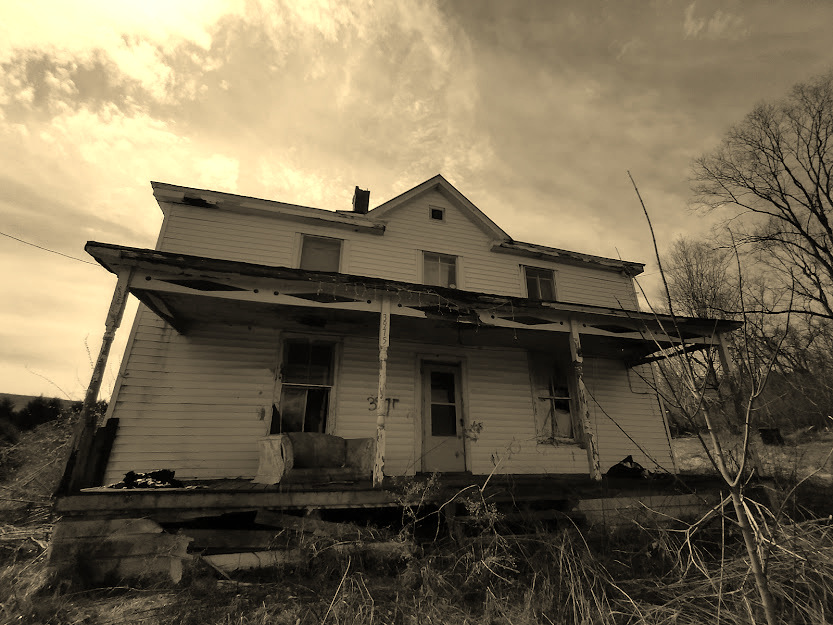
Upon the urging of Bath County citizens Sudduth and other Unionists returned home after being told that it was safe to do so. He arrived in Owingsville on October 16, 1862 and made a short speech. Then he proceeded to Isles Mill to establish a recruiting camp. However, things did not go as well as he had planned and he decided to return home late the following evening. He spent the night at the house of his friend and fellow Union supporter James L. Warren, who lived on the Owingsville Turnpike at Rose Run, about four miles from town.
Meanwhile, General Humphrey Marshall's forces had arrived at Ticktown on their way back to Virginia as part of the Confederates' retreat from Kentucky after the Battle of Perryville. The secession sympathizers of Owingsville sent word to Marshall that 400 Union men were in town, under command of Sudduth, and that they were well armed and he could get them all and their Arms." Accordingly, elements of the 1st Kentucky Mounted Rifles, Trigg's Rangers and Fifth Kentucky Mounted Infantry left Marshall's camp the same night in direction of Owingsville.
According to Sudduth's wife, "having been informed before they reached there that Col. Sudduth had gone to Licking to establish a camp, they sent a party of twenty-five after him, who arrived at Warren's after early breakfast on Saturday, the 18th." Warren had gone to a blacksmith shop near by, leaving Major Sudduth talking with his family. While thus engaged, one of Warren's younger sons, presumably James Warren who was sixteen years old at the time, came into the room and announced that some soldiers were approaching the house.
 |
| Warren House near Owingsville |
Thinking they were his own men, Sudduth went to the front door to meet them. He stepped out to the portico, but when the soldiers were within a few yards of the house, he discovered his mistake. As soon as Henry Ewing, a brother of George Ewing, who commanded the rebel gang, saw Sudduth, he immediately called out "there is the Major." Major Sudduth advanced and, recognizing some of the rebels, shook hands with Henry Ewing and Walter and James Lane, the latter two being his own nephews. Ewing asked him if he would surrender and Sudduth remarked that he supposed he was their prisoner but told him to wait until he could get his hat. Sudduth stepped back inside the house, went into the room where he had slept, got his hat and rifle, and stepped out of the back door for the purpose of concealing the rifle, a fine Colt, which he valued very highly, before surrendering.
As soon as he had stepped outside, two rebel soldiers came around the west corner of the house, and were ordered by the Major to leave. They all ran but just then Anderson Bowman made his appearance and levelled his piece at him, when Col. S. reminded him that he had surrendered. Regardless, Bowman fired, breaking Sudduth's right leg from the knee down and smashing the bone to pieces. About the same time and just as Major Sudduth was falling from this wound, another shot was fired from the east corner of the house by George Ewing who shot at Sudduth's back, grazing his right hip/ grazing his thigh.
Then a man by the name of Carpenter shot at his head, but his cap exploded. After Sudduth was in this wounded condition, Bowman drew up his rifle to fire a second time, but Sudduth, observing it, raised himself up on his knee and elbow and shot him through the heart. The Lanes were ordered to fire, but they refused, saying he was their uncle, though they stood by and did not interfere in his behalf.
Then two more of the rebels, Peyton Miller and Edward Sanders/Edwin Saunders, rushed to the back of the house, declaring that they would kill him. According to Sudduth's wife, "Mrs. Warren, her mother, a woman of eighty years of age, and a little girl of eleven, surrounded him and tried to shield him, but his assailants pulled them away and pushed them off, and regardless of their entreaties and cries threatened to shoot them if they interfered." (The identity of the eighty year old woman remains a mystery, as Mrs. Warren's mother had died in 1830. Her mother-in-law was also dead since 1825. The little girl may have been Florence Virginia "Jennie" Warren who was eight years old in 1862.)
By this time the entire band, some twenty-five in number, were present. Major Sudduth then laid aside his rifle and called out that he surrendered." Then one of the rebels...(and depending on what account to believe, it was either Edward Sanders, a fellow named Jardus/Jarvis or Peyton Miller) caught Sudduth by the throat and choked him. But there is no disagreement as to who dealt out the final shot. Peyton Miller exclaimed, "G-d- d-n you, I'll give you surrender," placed a pistol to the top of his head and shot him." Sanders had his foot upon Sudduth's breast, leaving the print of it upon his clothes.
The rebels left Sudduth weltering in his blood and went to Owingsville, "where they made their boasts that they had killed him and showed his gun as a trophy. They afterwards heard that he was still alive but did not credit it, though Miller said if he thought the d—d old scoundrel was not dead he would go back and shoot him with his own gun, and Sanders said he would go and cut his throat. Subsequently, Capt. Magee and another man were sent back for his shawl. Mrs. Warren told them he had none, but they insisted that they had been informed by the citizens of Owingsville that he rode out in one."
Sudduth, "the brave old man, though speechless" lingered for two more days until the night of Monday, the 20th, when he succumbed to his injuries. His final resting place is unknown.
When word of the affair reached Marshall's command that night, Edward O. Guerrant of Marshall's staff gave a somewhat different account. "Col. Trigg returned with his command from Owingsville. No Yankees there. Maj James Sudduth shot and killed Bowman of Miller's Bath Company, & was afterwards shot by Bowman, Hop Bickley & L't Miller, - and will die. Shot through the head. Poor Bowman! He was a good & brave soldier. Yesterday, I saw him in health & strength. Today, how cold, how lifeless!! Soldier rest, thy warfare o'er."
The Louisville Daily Journal noted on November 19, 1862, "We have detailed the circumstances connected with this cold-blooded and cowardly murder, because we are anxious to name the men and the part they took in it. They were all raised in Bath county and the Ewings within a mile of Col. Sudduth's residence, and he has protected Henry for near a year, as the latter professed that he wanted nothing to do with the Southern Confederacy, but wished to remain loyal. These fiends in human shape are now at large, returning to their homes at pleasure and then going back to Humphrey Marshall's army. The citizens of Owingsville, who put these fiends upon the track of their victim and hunted him down like a wild beast, are known and should be punished, as accessories both before and after the fact of the murder. Such an outrage upon any citizen should not pass unavenged by the sternest enforcement of the laws, but Col. Sudduth met his death because he was a patriot, and one of the noblest specimens of mankind we have ever known."
Major Sudduth's widow Mary Ellen took her husband's death hard. She noted, "I cannot yet say what I shall do for I am broken hearted it nearly kills me to think I had been so long separated from Mr Sudduth and that he came home just to be killed, the best Man that ever lived I am very sure and then he loved me so devotedly that he would have died for me any moment it was so hard to have him butchered in the way he was by such as set of devils. It seems to me I never shall be able to realize that he is gone forever as to being resigned to it it is impossible although I have to give him up."
Maj. General Gordon Granger, commander of the Army of Kentucky, considered Sudduth's death an act by guerrillas. On January 12, 1863, he offered a $1000 bounty for Sudduth's killers.
.jpg) |
| Louisville Daily Journal, January 17, 1863 |
Attacks against Union citizens continued. Meanwhile, Major Sudduth's family was still dealing with the aftermath of his death. His widow Mary Ellen wrote on January 27th, 1863, that his son, "Newton is so much opposed to my leaving while he is here and I begin to think he will not leave here at all. He seems to have given up entirely and is drinking harder then I ever seen him and yet he is distressed to death about his Papa says he has not a friend left if forsake him ... There are Squads of men passing in from the Rebel Army constantly and the Union men have to have every few Days to keep out of their way A Man they took Prisoner near Mudlick Springs got away from them and was here last Sunday says they said they intended to kill Newt if it cost them their lives Greenwade was in the gang. I have tried every way to get him to leave but have failed, and if they come here in a gang they will be sure to get him he is drinking so much."
The following day, January 28, 1863, a party of 150 rebels under Thomas Greenwade who was recruiting a company under Humphrey Marshall, appeared at Mudlick Springs. Hiram Jenkins, who, according to Sudduth's widow, had tried his best to earn Granger's bounty money, was killed as was Jenkins' son. 19 year old Thomas Yarber, son of Randolph Yarber and Annie Griffin from Olympian Springs, a paroled soldier of the 2nd OVI, was the third victim. He was a member of Company E, the Lafayette Guards from Cincinnati.
 |
| Thomas Yarber Pension index card |
Sudduth's Rangers, who in the past were able to offer at least some protection against these type of depredations, were no more. Many of them had joined the army and there simply were not enough men left to form a Home Guard that would be of any service.
Sudduth's widow decided to write a letter to Brig. General John Quincy Gilmore, division commander of the Army of Kentucky, imploring him to send troops and protect the Union citizens. Just days later, her greatest fears became reality when on February 1, 1863, a group of 250 rebels entered Owingsville at a late hour, "stripped two boot and shoe stores completely—even taking baby shoes—then entered a dry goods house, from which they took all the cotton cloth, women's shoes, and other articles. They then gathered all the quilts in the neighborhood and all the sacks that could be found for the purpose of carrying off their plunder. They also took about one hundred of the best horses in the vicinity." Union authorities reported that Rebels entered Owingsville Sunday night [1st]; robbed all the Union stores, stole 40 or 50 horses, and took off as prisoners several Union men." William Newton Sudduth was taken by the rebels. Fortunately, he was able to escape and return home. Other Unionists, including John Miller, the Jailer of Bath county as well as Mr. Gill, the proprietor of the Olympian Springs, fled for their lives to Mount Sterling.
On February 20, 1863, Mary Ellen Sudduth noted, "I have felt so bad and so much depressed that it is a bother for me to live. Four months to Day since my happiness on Earth ceased. I am ruined and miserable every day makes my troubles more and harder to bear, it is the hardest trial I have ever had by far all put together are nothing to compare to it. it seems as if never can be able to realize that Mr Sudduth is dead. No mortal was missed so much. There is a Report here to Day that Peyton Miller was taken by a Party of Col Cochrans men a few days ago but I am so much afraid it is not true." This may have been the arrest eluded to by the Louisville Daily Journal on February 23, 1863, noting that a report from Paris had announced the capture of at least one of the murderers of Sudduth. However, there are no records confirming Peyton Miller's arrest.
On March 18, 1863, Mary Ellen Sudduth wrote to her sister Anna, "There was two of the Villains taken Prisoner in the Winter that was there and took part in it (Sudduth's murder; MP) they were sent to Camp Chase and I am so afraid they will be released or exchanged I never knew until after the Mail was stopped that they were there Mrs Daniel said they eat Breakfast at her House and was bragging about it their names are Jesse Nelson and a Man named Hadden or Hatten. I wish you would see some one and get them to write to the Proper Authority at Camp Chase or do it your self I feel so anxious that all that took part in it should be punished."
Mrs. Sudduth's fears seem justified. According to arrest records, Jesse Daniel Nelson and Thomas Hadden were capture in Powell County, Kentucky near Red River on December 26, 1862. Both men were sent to Vicksburg via Cairo for exchange, on January 11, 1863. Nelson was paroled at Camp Douglas, Ill., on March 30, 1863. There is no further record for Hadden.
On February 26, 1863, the Kentucky legislature introduced a bill appropriating "$500 for expenses incurred by Col. Sudduth, in the service of the State, in the raising of troops for the State." The Frankfort Daily Commonwealth reported, that "Mr. PRALL addressed the Senate in a few eloquent remarks of eulogy on Col. Sudduth, and earnestly advocated the passage of the bill, only as an act of justice. On motion of Mr. RHEA, the vote rejecting the bill for the benefit of the widow of Col. James Sudduth, was reconsidered, and some discussion then ensued on the merits of the bill, in which Messrs. WRIGHT, PRALL, SPEED, and GOODLOE, advocated its passage, and Mr. WORTHINGTON opposed it, as setting a bad precedent." The bill eventually passed.
Several months passed until additional guilty parties involved in Major Sudduth's killing were apprehended on June 16, 1863, following a raid on Maysville by Pete Everett. The Maysville Eagle reported that "Jas. A. Connor, one of them captured at Triplett's Bridge, was present at the murder of Major Sudduth last fall. He has been heavily ironed and confined in a seperate cell." Also captured was Nicholas Hadden "who helped to Murder Mr Sudduth." Mary Ellen Sudduth noted, "I am so afraid he will be turned loose as soon as I found out that they had him I wrote to Genl Sturgiss and he answered that he had written to the Provost Marshal to retain him and Jim Connor that he intended to make them tell all that was engaged in it.." Connor and Hadden were sent to Lexington and then to Camp Chase, Johnson's Island and finally to Pt. Lookout, Maryland. Conner died on Aug. 12, 1864, from acute dysentery. Hadden was released on oath, April 12, 1864.
Mary Ellen Sudduth soon left her home in Bath County and moved to Fayette County to be closer to her family. According to a letter written by her from Owingsville on July 5, 1863, she seemed to have suffered from dropsy. She died a month later on August 4, 1863. The following note appeared in the Louisville Daily Journal, on Friday, August 7, 1863. "Mrs. Mary E. Sudduth died on Tuesday last at the residence of her mother, near Lexington. She was the widow of Major James Sudduth, of Bath county, who was so cruelly murdered by guerillas in that county last year."
Major Sudduth's son William Newton Sudduth never overcame his father's death as well as the loss of his step mother Mary Ellen who seemed to have been his support. He died on January 24, 1864, at the Manning House in Springfield, Illinois, from "pneumonia, caused by intemperance."
 |
Sangamon Journal - Illinois State Journal
January 25, 1864 |
Approximately 25 men were part of the group that were involved in Major Sudduth's killing. 13 of them are known by name, two of them are not 100% confirmed. The rest of the group have remained unknown up to this day. Some of the men belonged to Robert G. Stoner's Bath County Company of Cavalry, later Co. E, First Battalion Kentucky Mounted Rifles.
Peyton Morris Miller
3rd Lt. /Captain, Co. E, First Battalion Kentucky Mounted Rifles
He was born in 1838 in Missouri, the son of John T. Miller, a physician and his wife Isabella. In 1850, the family lived in Bourbon County, Kentucky. In 1860, Miller clerked in a dry goods store in Owingsville.
Burial site
Anderson Bowman
Private/Sergeant, Co. E, First Battalion Kentucky Mounted Rifles
Edward E. Sanders/Edwin E. Saunders
Ordinance Sgt./ 1st Lieutenant, Co. E, First Battalion Kentucky Mounted Rifles, mustered out Nov. 20, 1862.
Son of Oliver M. Saunders and wife Mariah Burns. Born abt. 1842. Place of residence was Sharpsburg. Died 5 Aug 1865.
burial site
John "Hop" Bickley
Private, Co. E, First Battalion Kentucky Mounted Rifles
Walter W. Lane
Corporal, Co. E, First Battalion Kentucky Mounted Rifles, mustered out Nov. 20, 1862.
b. 1836, KY. Lived in Bethel, Bath County in 1880 and was a teacher.
James N. Lane
Private, Co. E, First Battalion Kentucky Mounted Rifles, mustered out Nov. 20, 1862.
b. abt. 1842.
Both Walter W. and James N. Lane were sons of William S. Lane of Sharpsburg, KY.
Gustavis S. Magee
2nd Lieutenant, Co. A, First Battalion Kentucky Mounted Rifles. Asst. Act. Quartermaster.
B. abt. 1829, farmer in Harrison Co. KY in 1860, District No. 1.
George M. Ewing
Captain, Co. H, 5th KY Mounted. Infantry. Mustered out Oct. 22, 1862.
Henry Ewing
Co. F, First Battalion Kentucky Mounted Rifles
Both Ewings were sons of iron master Joshua Ewing, who, with Harrison Connor, built Caney Furnace abt. 1837-38. Henry Ewing served as deputy sheriff of Bath County in 1860. There are no surviving service records for Henry Ewing. His service is mentioned in his obituary. He served as a commissioner of the Confederate Home at Pee Wee Valley.
James A. Conner
Private, Co. F, 2nd Battalion Kentucky Mounted Rifles
Captured at Tripletts Bridge, June 16, 1863. Arrived from Lexington, KY at Camp Chase, June 24, 1863. Sent to Johnson's Island, June 26, 1863. Sent to Point Lookout, Nov. 30, 1863. Died Aug. 12, 1864, Pt. Lookout, Maryland, from acute dysentery. 6' 4", hazel eyes, dark hair, dark complexion, 41 years old.
Jesse Daniel Nelson
Corp./Sgt., Co. E, 1st Battalion Kentucky Mounted Rifles, enl. Oct. 12, 1861, Camp Buckner, Cumberland Ford, present at muster-out Nov. 20, 1862, Abingdon, VA.
Private Co. E, 2nd Battalion Kentucky Mounted Rifles, enl. Dec. 20, 186?, captured Dec. 25, 1862.
When captured he gave his names as Jesse Daniel Nelson and his unit as 5th Kentucky Cavalry. Captured Dec. 26, 1862, Red River, Powell Co. KY.; taken to Lexington, KY; sent by Provost Marshal to Vicksburg for exchange, Jan. 2, 1863 (date appearing on roll of prisoners); sent to Vicksburg via Cairo, Jan. 11, 1863; paroled Camp Douglas, Ill. March 30, 1863; no other service record.
Thomas Hadden
Private, Co. A, 5th Kentucky Cavalry, sent to Vicksburg via Cairo, Jan. 11, 1863; no other service record. Captured with Jesse Daniel Nelson.
Nicholas Hadden
Private, Co. B (Pete Everett's Company), 1st Battalion Kentucky Mounted Rifles
Enl. Sept. 1, 1862, Mt. Sterling; absent since Oct. 20, 1862; captured June 16, 1863, Triplett's Bridge, received at Camp Chase June 24, 1863 from Lexington, KY; 6 ft; 23 years old, blue eyes, light hair, fair complexion; Transf. to Johnson's Island June 26, 1863; sent to Point Lookout, Nov. 30, 1863; released on oath April 12, 1864.
B. abt. 1840, from Montgomery County, Kentucky.
Uncertain about exact identity
M. Carpenter
Private, Co. H, 5th KY Mounted Infantry, mustered out Oct. 22, 1862
OR
Willis Green Carpenter
Private, Co. D, 5th KY Mounted Infantry until mustered out October 20, 1862 at Hazel Green; captured July 22, 1863, at Mt. Sterling and went to Camp Chase until February 8, 1865 when released upon taking the oath. CSA pension. From Bath County, KY but resided in Morgan County, KY in 1865.
James L. Jarvis
5th Sgt./hospital steward, Co. E, 5th Kentucky Mounted Infantry
Links of Interest
Researched, transcribed and written by Marlitta H. Perkins, April 2022. Updated May 1, 2022. Copyright © 2022, All Rights Reserved.


.png)
.jpg)


.jpg)


.jpg)


